
The plaster casts are also intended to be cast in bronze.

“Anima”, group of thirteen figures, 2007.
Metal structure, painted plaster,
51.6 x 200 x 20.5 cm approx.

“Jojen”, “Dames” series, 2011.
Metal structure, painted plaster,
33 x 16 x14 cm.
Private collection.
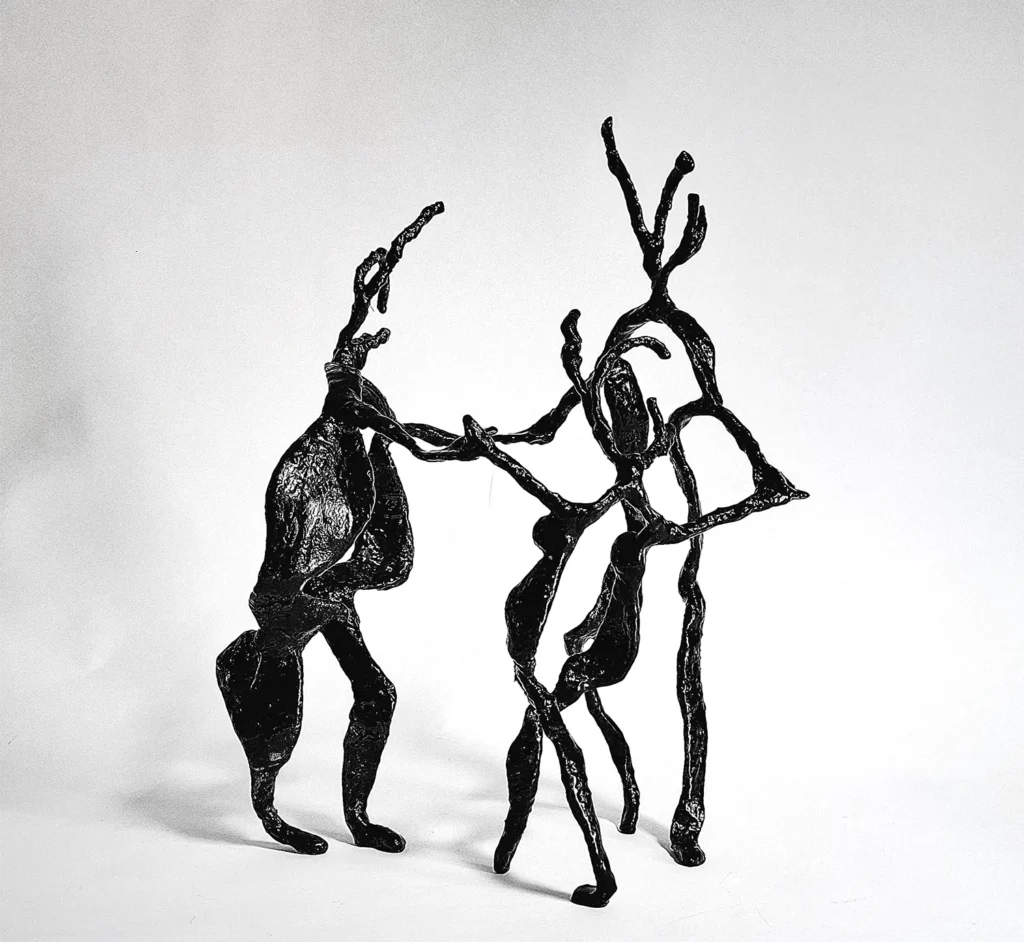
“Dancers”, 2018.
Metal structure, painted plaster,
34 x 20 x 15 cm each.


“The Prince of Aquitaine at the Abolished Tower”,
“The Cephalaires” series, 2010.
Metal structure, painted plaster,
102 x 82 x 48 cm.
The artist does not seek to account for the form, but rather to suggest an attitude, a movement, a character, an emotion. Brancusi said: “The base must be part of the sculpture, otherwise I do without it”.
Pascal Pistacio does without it, whatever the size of the piece is In fact, he has made it the major axis of his reflection about balance His works play with gravity.
Pascal Pistacio also plays with the threedimensionality of his art. Each viewing angle offers a truly renewed perception of the work.
He links the artistic experience to the common experience and thus addresses themes that he often draws from mythology or art history, such as virginity, childbirth, money etc. The titles of his works are also very important.
He tries, from an individual and singular destiny, to give back to his sculpture what was left behind with abstraction: its capacity to evoke the human being, its universal and humanistic dimension.
Michaële Liénart, Director of Lienart Éditions.


“Boxing, Achille and Hector”, 2015.
Metal structure, painted plaster.
Achilles – 108 x 30 x 42 cm.
Hector – 104 x 33 x 48 cm.
Private collection.

“ S. C. ”, 2019.
Metal structure,
painted plaster,
22.5 x 10 x 9 cm.

“M. M.”, 2019.
Metal structure,
painted plaster,
27 x 17 x 11 cm.

“J.M. X.”, 2019.
Metal structure,
painted plaster,
19,5 x 13 x 13 cm.

“J.P. V.” , 2019.
Metal structure,
painted plaster,
40 x 13 x 13 cm.
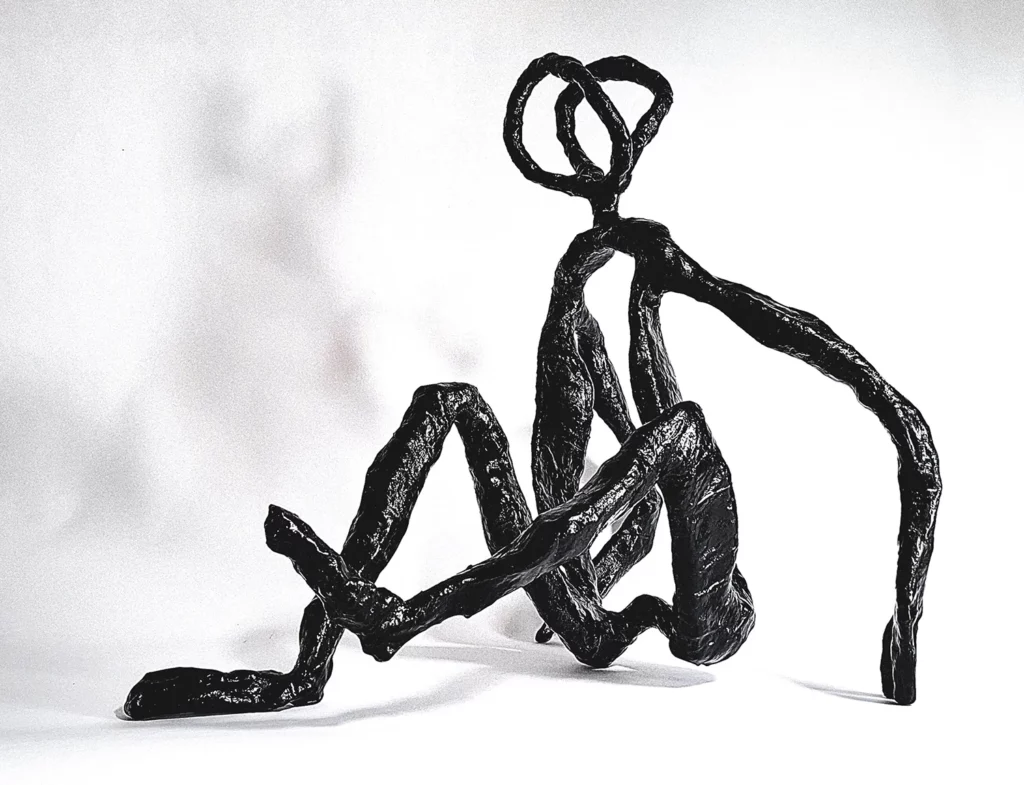
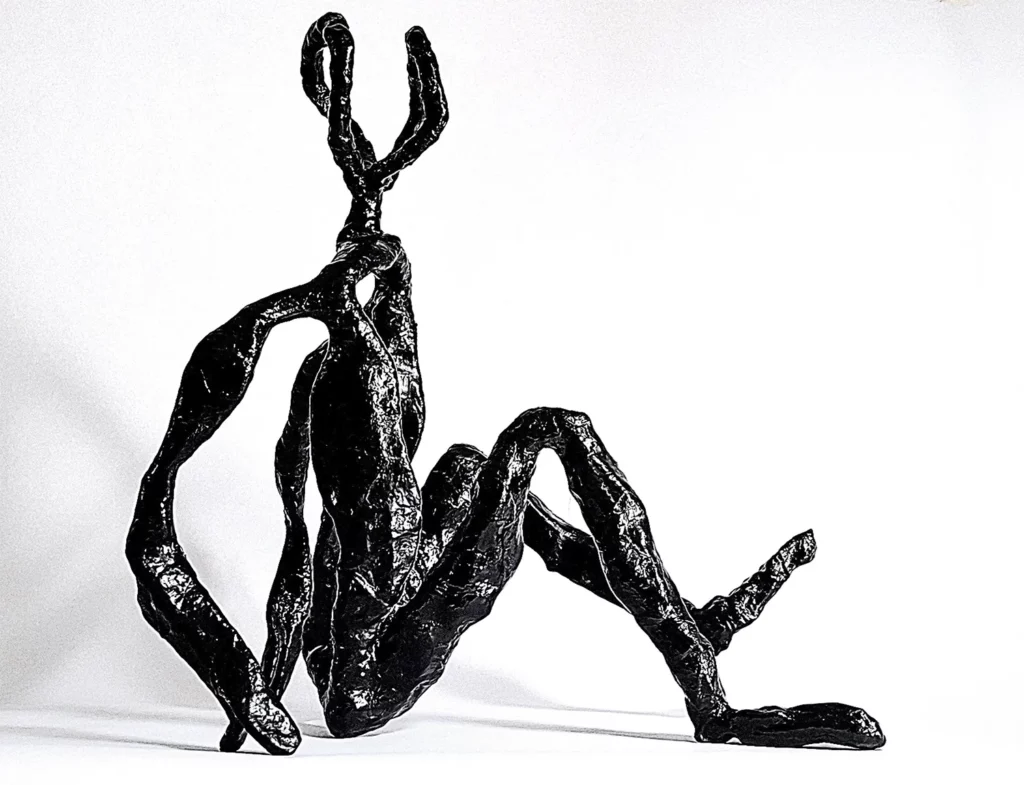
”Stand up !”, 2026.
Painted plaster,
68x69x47 cm.
”The dance of the Fools”, 2026.
Painted plaster,
41x29x22cm.
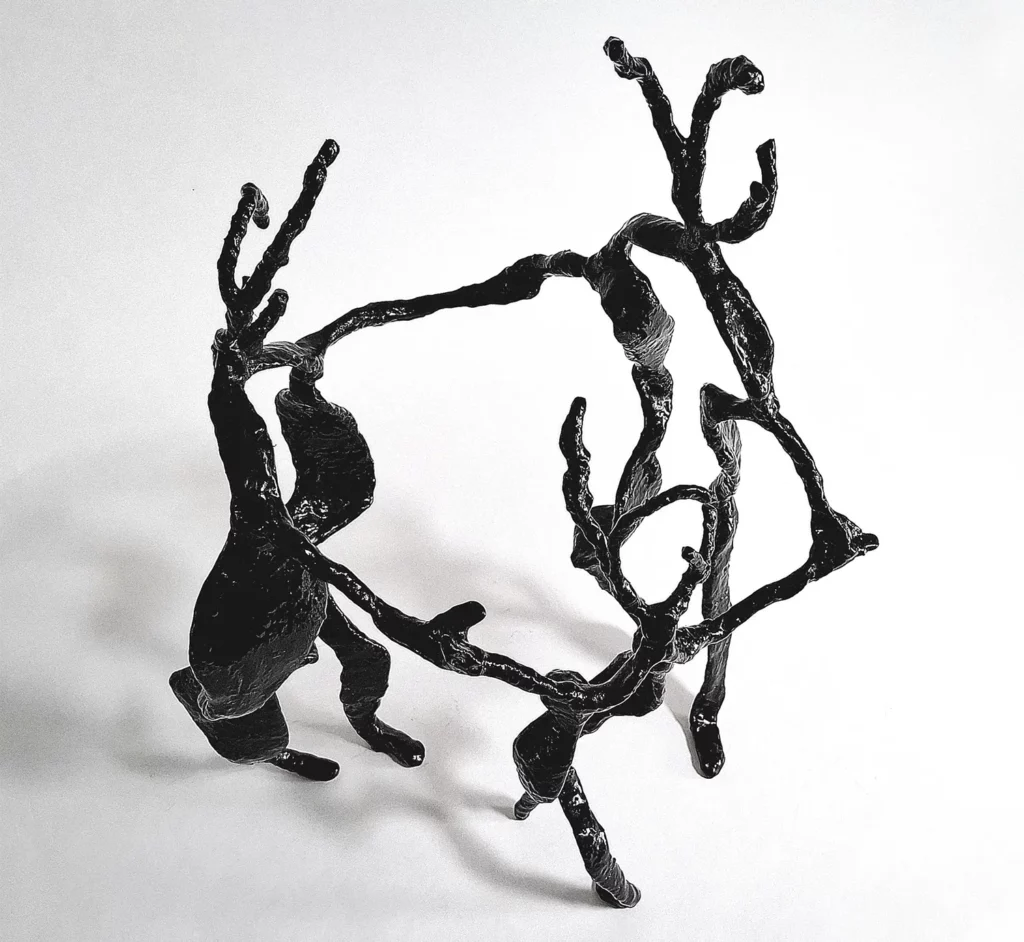
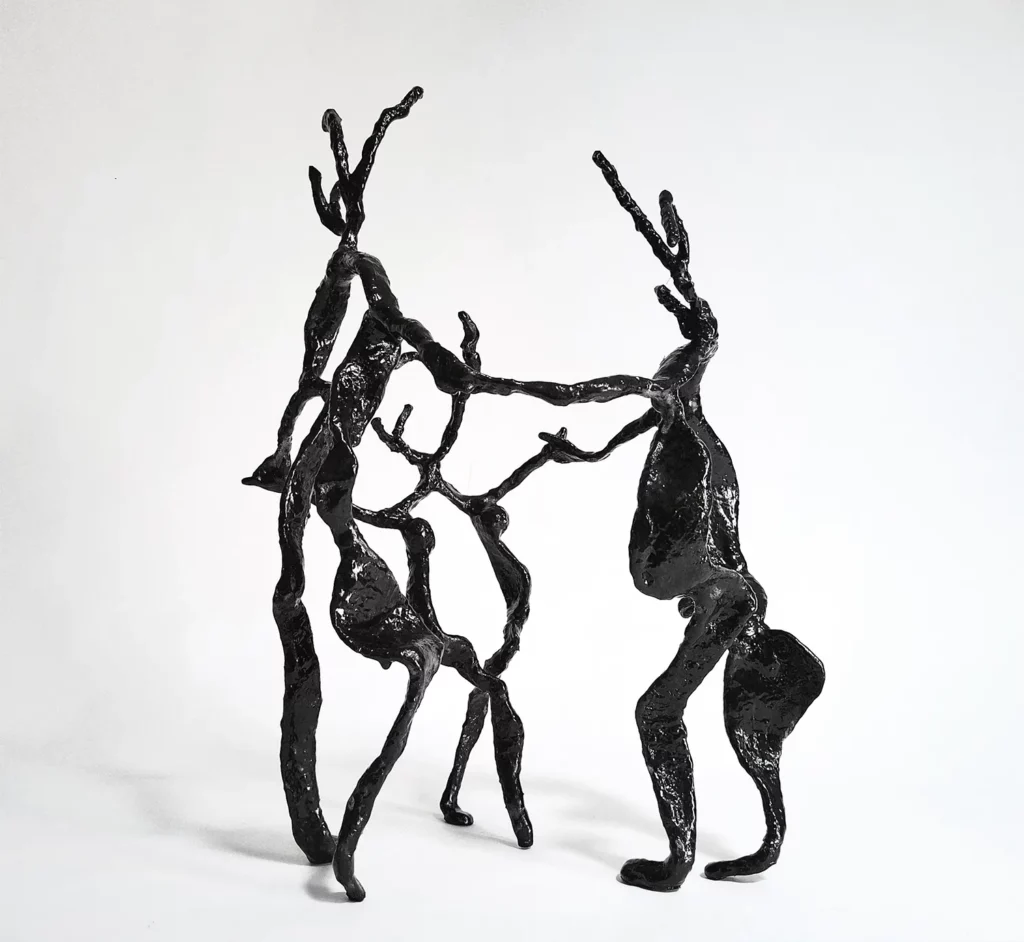
L’ENFER DE DANTE – Painted plaster 2024

CANTO VIII
Fifth circle – crossing the Styx
The angry and the melancholic, mired in the Styx.


Les rampants du Styx.
Group of 3.
Painted plaster,
25 x 47 x 31 cm.

25 x 25 x 20 cm.

20 x 35 x 22 cm.

20 x 25 x 20 cm.

CANTO XXIV
Eighth circle – Bolge 7 – The thieves
Stung by the snakes, the body of the damned catches fire, turns to ash and is reincarnated. The process is perpetually renewed, as with the Phoenix. Death and “reincarnation” of the thief Vanni Fucci, who provocatively makes the obscene gesture of eating a fig.


Death and ‘Reincarnation’.
Group of 4 pieces and green clay as ash.
Painted plaster,
45,5 x 65 x 44 cm.
CANTO XXVIII
Eighth circle – Bolge 9 – The troublemakers
Bodies mutilated, disembowelled by a demon. The wounds close, the sword splits them open again.


Disemboweled.
Painted plaster,
12 x 18 x 17 cm.

Mutilated.
Painted plaster,
15 x 30 x 19 cm.


Decapitated.
Painted plaster,
38 x 19 x 11 cm.